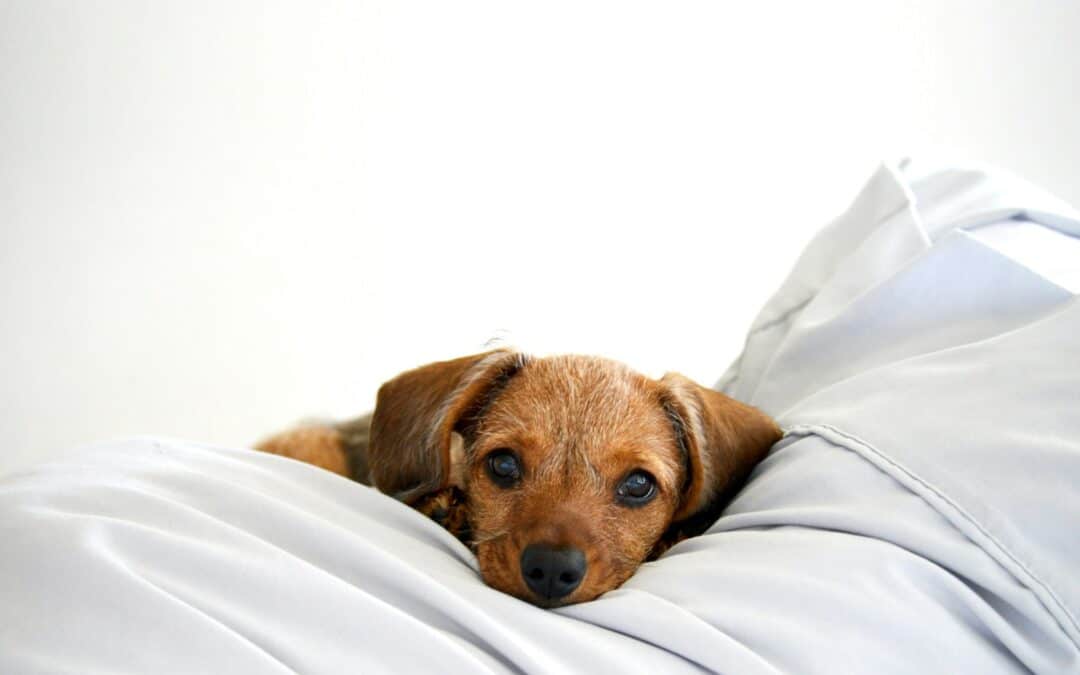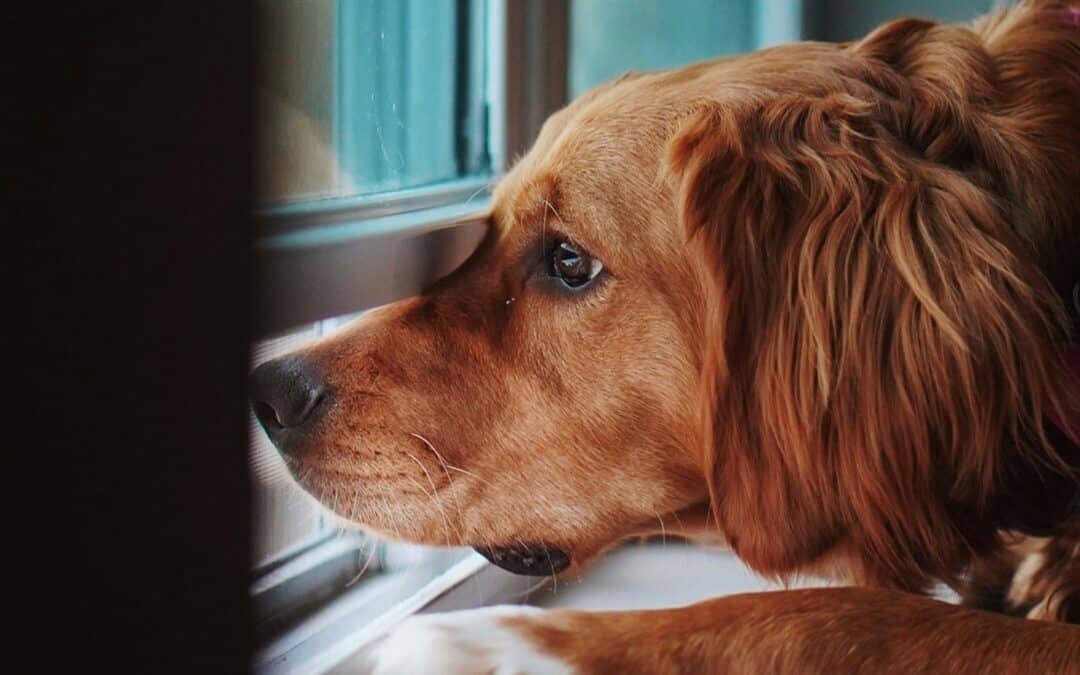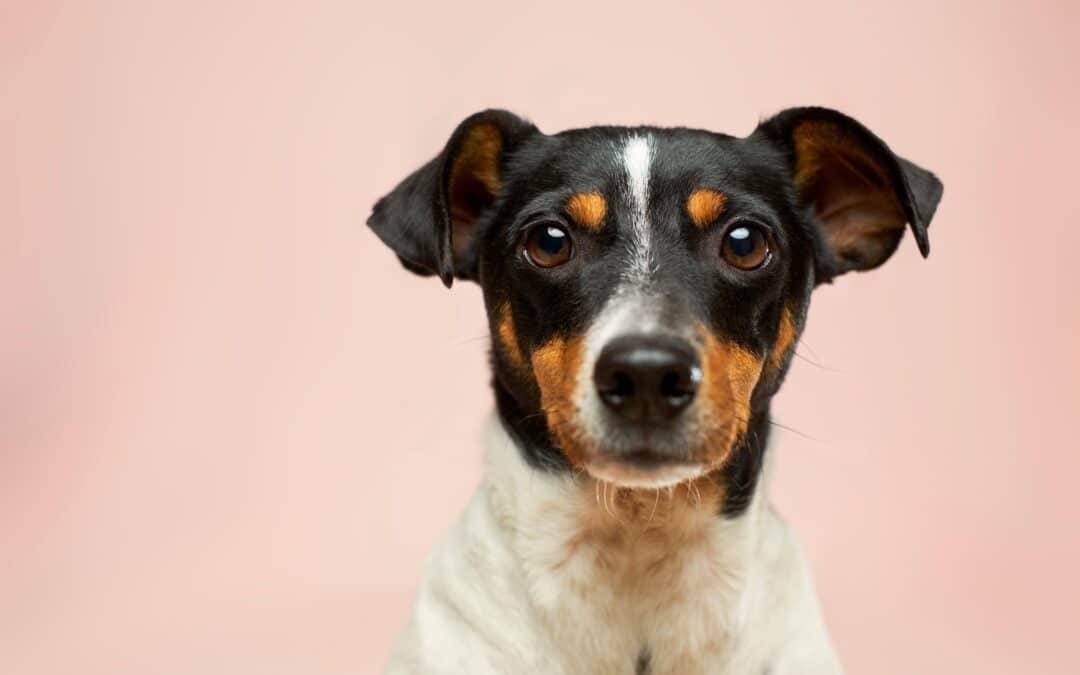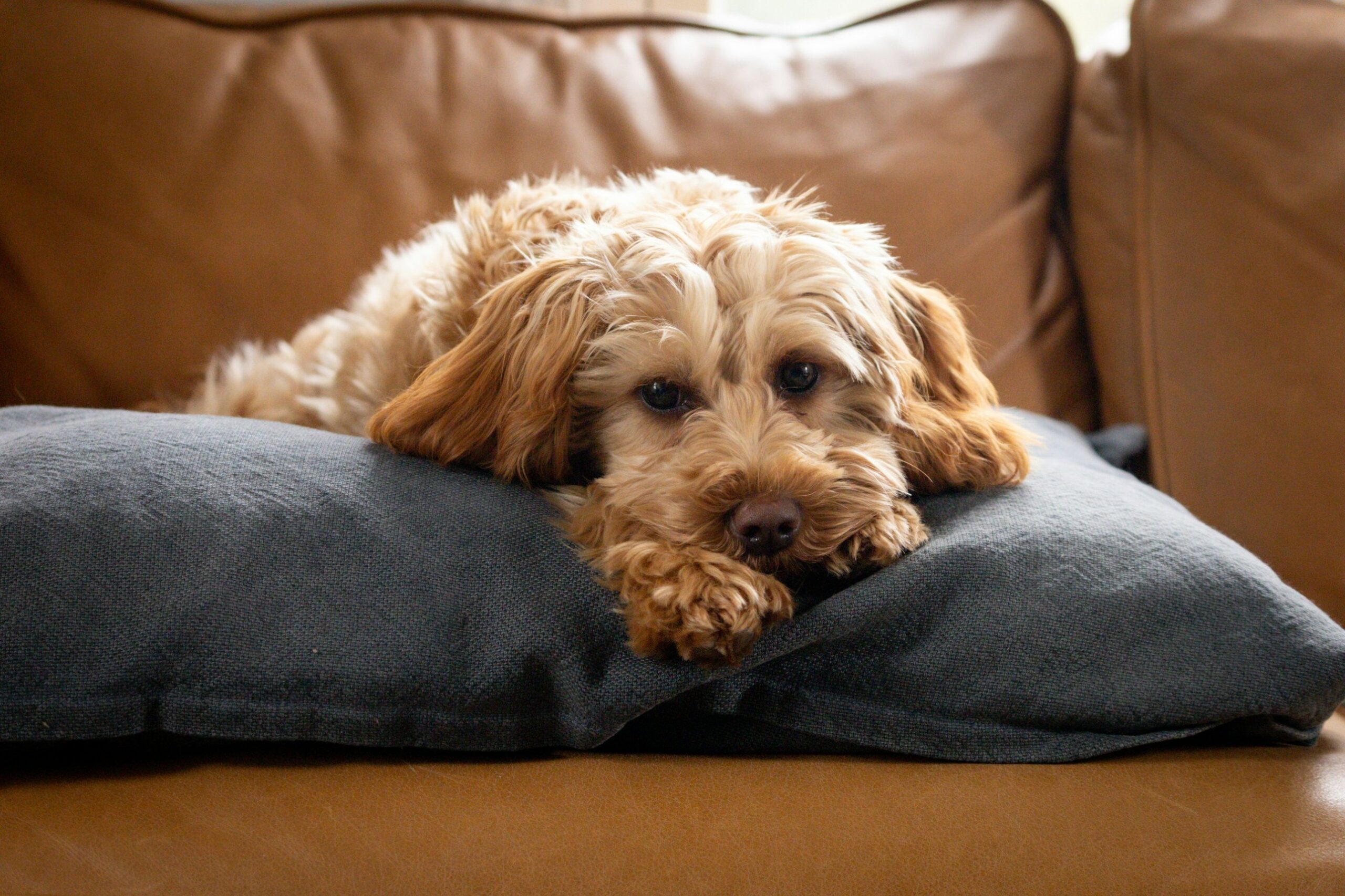
You walk in the door, spot the shredded couch cushion, and there he is: Your sweet dog with his head low, ears back, eyes sliding away from yours. It’s hard to see that face and believe anything other than, “He knows exactly what he did.”
But in reality, the “guilty look” in dogs isn’t guilt. It’s an appeasement response to a person’s tone and body language in the moment, and research shows dogs make it whether or not they actually misbehaved.
If that look has ever left you feeling a little betrayed, or a little heartbroken for your dog, you’re in good company. It’s one of the most familiar moments in life with a dog, and one of the most misunderstood. What’s really going on is kinder than guilt, and understanding it can change how those homecomings feel for both of you.
What the Dog Guilty Look Looks Like: Common Appeasement Signals
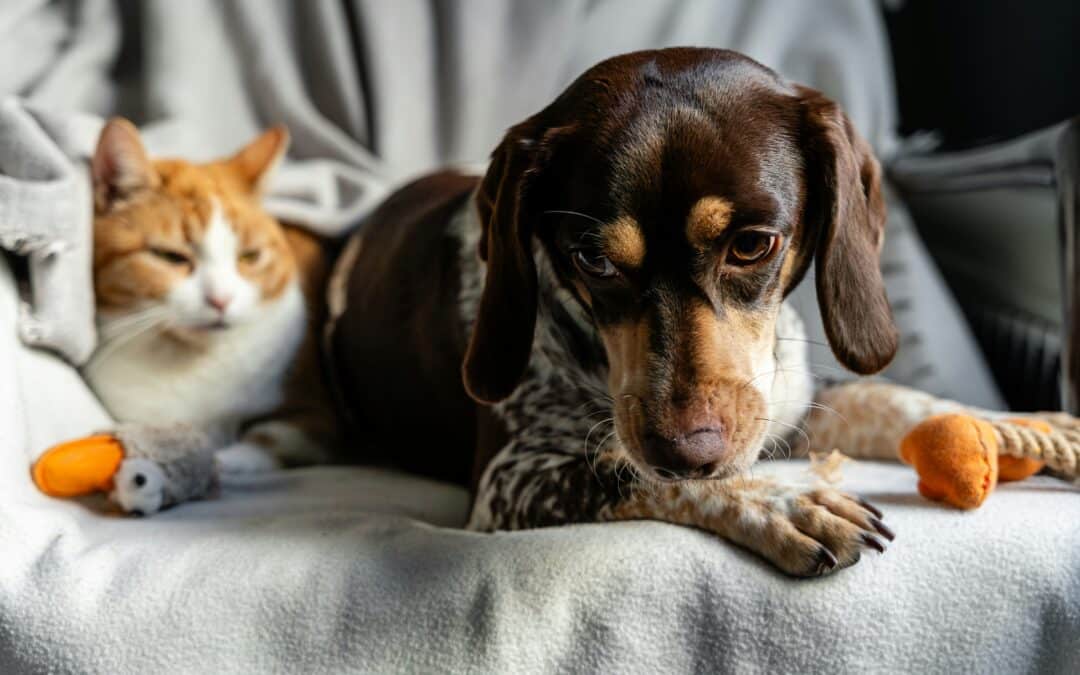
Most pet parents could describe this face easily. Behavior researchers call it a cluster of appeasement signals: body language dogs use to soften a tense moment and show they mean no harm. You’ll often see several at once:
- Lowered head and body, sometimes a slow, crouching approach
- Ears pinned back or flattened
- Tail tucked low, or wagging quickly in a low position
- Looking away, or showing the whites of the eyes (“whale eye”)
- Lip licking, yawning, or blinking
- Rolling onto the back, or quietly leaving the room
While you may see all these signals when you come home to a freshly destroyed sofa, they’re actually the same a dog might show when meeting an intimidating stranger or a tense dog at the park. And, critically, they’re about the social moment happening right now, not about something that happened an hour ago.
Do Dogs Feel Guilty? What Science Says About Dogs and Guilt
It makes sense that we read guilt into that face, because it looks so much like guilt in a person. Scientists, though, haven’t found good evidence that dogs feel guilt the way we do. Guilt means connecting something you did earlier to a rule, knowing you broke that rule, and feeling bad about it afterward. Dogs clearly feel real emotions, including fear, anxiety, and deep attachment to their people, but the guilty look doesn’t show that kind of looking-back reasoning.
What dogs are remarkably good at is reading us. They notice a tightened jaw, a sharper voice, or the way we freeze in the doorway, often before we realize we’ve done any of it. The guilty look is your dog’s way of saying, “I can see you’re upset, and I want us to be okay.”
What Research Shows About the Dog Guilty Look
Dog cognition researchers have put the guilty look to the test, and the results surprise most people who live with dogs. Across studies, the look tracks how the owner reacts, not whether the dog actually did anything wrong.
In a 2009 study published in Behavioural Processes, dog cognition researcher Alexandra Horowitz of Barnard College asked owners to tell their dogs not to eat a treat, then leave the room. While the owners were away, some dogs were given the treat and some weren’t. When the owners came back, they were sometimes told the wrong story about what had happened. Dogs looked most “guilty” when their owners scolded them, and dogs who had done nothing wrong but were scolded anyway looked more guilty than dogs who had actually eaten the treat. (ScienceDaily summary of the Horowitz study)
A 2015 follow-up by Ljerka Ostojić, Mladenka Tkalčić and Nicola Clayton, also in Behavioural Processes, asked 96 owners to stay neutral and decide, from their dog’s greeting alone, whether the dog had eaten a forbidden snack. Owners guessed no better than chance. Whether the dog had eaten the food, and whether the evidence was still in sight, made no difference to how the dogs greeted them. (Ostojić et al., 2015)
“A chewed doorframe or a puddle by the door can look like defiance. For a dog with separation anxiety, it’s panic, not a choice.”
Why Your Dog Looks Guilty Before You Even Find the Mess
This is the moment that convinces a lot of loving, observant pet parents the guilt must be real. You haven’t said a word, and your dog is already slinking toward the hallway.
One likely explanation is a learned association. If your dog has seen you come home, find something chewed or soiled, and get upset, they can learn that “you arrive plus a mess on the floor” predicts a tense moment. The appeasement signals may start early because your dog is anticipating your reaction, not reflecting on the chewing that happened hours before.
Dogs also pick up on small changes in us, like a pause at the door or a glance at the floor, faster than we notice making them. And in the 2015 study, where owners stayed neutral, dogs who had broken the rule didn’t greet their owners any differently from dogs who hadn’t, which points to the human reaction, not the mess itself, as the real trigger.
The Guilty Look Is Communication: What Your Dog Is Asking For
At Pet Allies, we believe in the core idea that behavior is communication. Every behavior is a pet’s way of telling us something, and the guilty look is a perfect example. It isn’t a confession. It’s a request for the tension to ease and for things between you to feel safe again, and that’s a request worth answering gently.
Seen this way, the look is also a clue. A dog who shows appeasement signals every time you walk in is a dog who has learned to brace for homecomings. That’s useful to know, and it points back to the question that actually matters: why did the chewing or the accident happen in the first place?
How Your Reaction to a Mess Shapes Your Dog’s Guilty Look
Coming home to a ripped pillow or a urine puddle after a long day is genuinely frustrating, and it’s natural to react with a sharp, “What did you do?!” or a disappointed look. That’s human nature, and you’re far from alone.
Because dogs connect our reactions to what’s happening in the moment, rather than something they did minutes or hours earlier, a frustrated reaction can’t teach them to skip the chewing next time. What it can teach, unfortunately, is that your arrival sometimes means trouble. That makes homecomings harder, and it can make the guilty look show up more often.
This matters most when the mess wasn’t random. Damage near doors and windows, or accidents that only happen when your dog is alone, can be signs of separation anxiety in dogs, a panic response to being left. For a dog who is already distressed when you leave, worrying about your return adds one more thing to carry.
A chewed doorframe or a puddle by the door can look like defiance. For a dog with separation anxiety, it’s panic, not a choice.
What to Do When You Come Home to a Mess Your Dog Made
The first minute after you walk in sets the tone for everything that follows, and a calm, curious response helps more than you might expect. The first two steps of the Pet Allies Approach, observe and understand, are made for exactly this moment:
- Greet your dog calmly first. Say hello the way you normally would, move your dog to another room if you need to, and clean up without comment.
- Notice the pattern. When does it happen, where, and how long was your dog alone? Damage at exits points toward anxiety. Random chewing in a young or under-exercised dog points toward boredom or extra energy.
- Check in with your veterinarian. New house-soiling in a house-trained dog, or a sudden change in chewing, is worth a call to rule out a medical cause.
- Set your dog up to succeed. Put tempting items out of reach, offer enrichment like puzzle feeders or long-lasting chews, and shorten alone time while you figure out the cause.
Getting to the why is what actually changes the behavior. And when homecomings stop feeling tense, the guilty look often has far less reason to show up.
Common Questions About the Dog Guilty Look
Probably not in the way people mean it. Dogs can learn that certain situations, like you arriving to a mess, predict an upset person, but research suggests the guilty look reflects your reaction in the moment rather than an understanding of having broken a rule.
The guilty look is less an apology than an appeasement signal, a way of calming a tense moment. It’s your dog asking for things to be okay, which is worth responding to gently.
That’s exactly what the research found. In the 2009 Barnard College study, dogs who never touched the treat still showed the guilty look when their owners reacted as if they had, because the look responds to your mood, not to the dog’s own actions.
Calmly interrupt, offer something they’re allowed to chew instead, and praise them when they take it. Afterward, look at why the chewing is happening, whether that’s boredom, teething, too much time alone, or stress.
Usually it means your dog is tuned in to your mood, not afraid of you. If your dog shows these signals often, cowers when you come home, or seems worried around you at other times too, a Pet Allies Behavior Expert can help you understand what’s behind it.
Cats show their own stress and appeasement signals, such as crouching, hiding, or flattening their ears, but the classic guilty look has been studied mostly in dogs. The same principle applies: respond to the cause of the behavior, not the moment you discover it.
Want to learn ways to live better with an anxious or destructive dog? Get personalized advice and a treatment plan from a Pet Allies Behavior Expert.