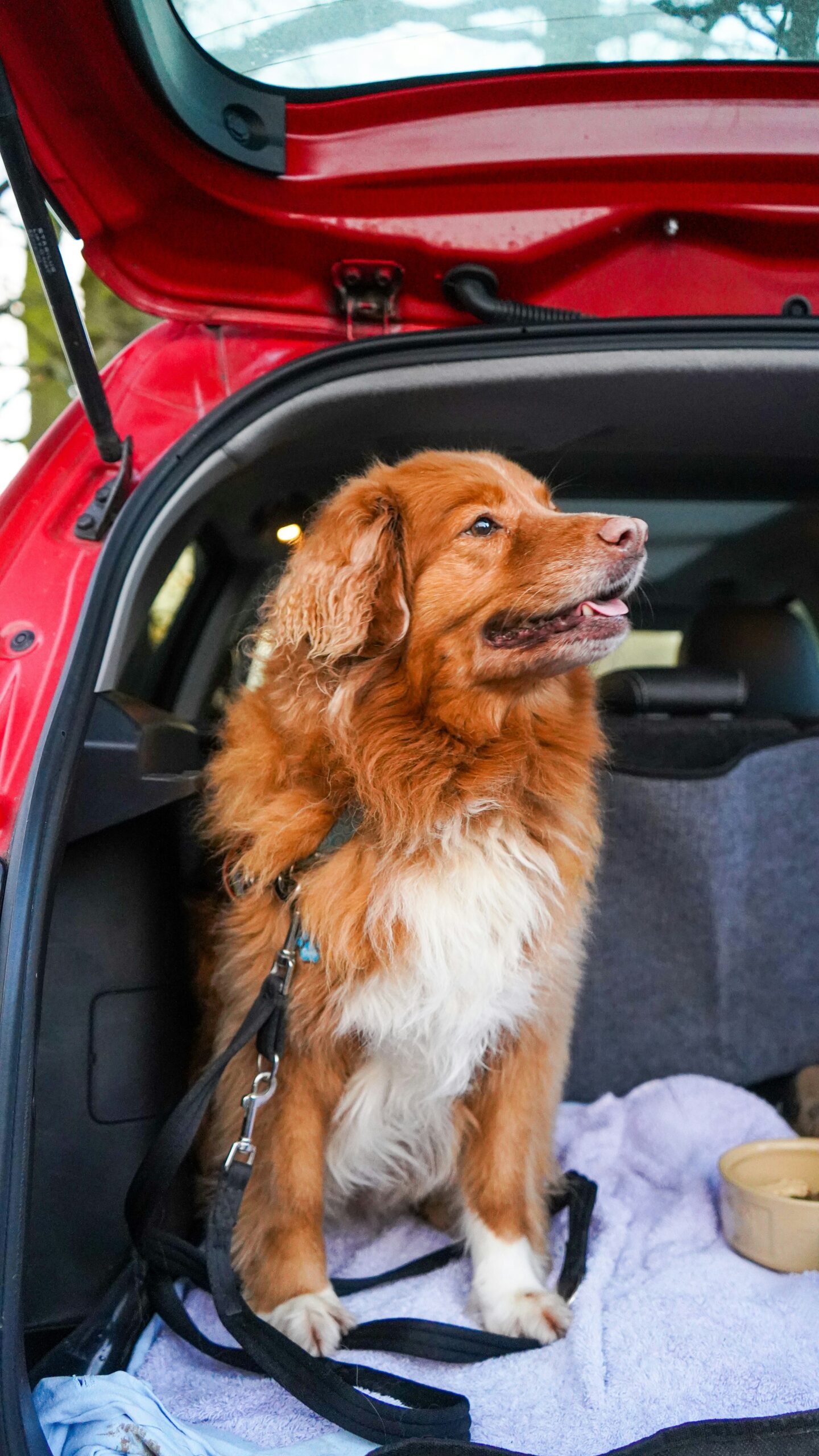
A dog drooling and panting in the backseat gets written off as carsick more often than not. Sometimes that’s exactly what’s happening. But for a lot of dogs, the real problem isn’t their stomach, it’s travel anxiety, and telling the two apart changes everything about how to help.
What Is Travel Anxiety in Dogs?
Travel anxiety is a fear response tied to the car itself, the engine noise, the motion, confinement in a crate or harness, or where the car has taken the dog before, rather than a digestive issue or a general dislike of new places.
The two get confused constantly because they can look nearly identical: drooling, panting, even vomiting. True motion sickness is a physical response to movement, similar to how some people get carsick, and it can happen to a dog who’s otherwise completely relaxed about the car itself. Anxiety-driven symptoms, by contrast, often start before the car is even moving, sometimes before the dog is even in the car, which is one of the clearest signs the root cause is fear rather than motion.
One pattern worth naming directly: a dog whose only car rides have been to the vet can develop a learned association between the car and something stressful, not because of the car itself, but because of where it always leads. (This is one reason travel anxiety and veterinary anxiety so often show up together, and why building positive, non-vet car experiences is part of treating both.)
Common Signs of Travel Anxiety
Signs can appear before the car starts moving at all, which is an important clue for telling anxiety apart from pure motion sickness.
- Excessive drooling that starts before the car is even moving
- Panting, pacing, or whining once inside the car
- Trying to escape a crate, carrier, or seatbelt harness
- Vomiting, which can be anxiety-driven rather than purely motion-related
- Refusing to get in the car, or needing to be lifted or coaxed in
- Trembling or hiding in the footwell during the ride
Get personalized advice and a treatment plan from a Pet Allies Behavior Expert:
The Pet Allies Approach to Travel Anxiety
Observe. Note whether the anxiety starts before the car moves (a sign of anticipatory fear) or only once it’s in motion, and whether it’s tied to a specific destination, especially the vet.
Understand. Distinguish true motion sickness (a physical response that often improves with anti-nausea support) from fear-based anxiety, or a destination-specific association that’s been learned over time.
Support. Counterconditioning starts with the parked car, treats or play time in a stationary vehicle, before ever adding motion. From there, short drives to enjoyable destinations, not just the vet, build a new, more positive association with the car itself.
Practice. Frequent, short, positive trips do far more than occasional long, stressful ones. Consistency in keeping most car rides low-stakes and rewarding is what shifts the underlying association over time.
What Doesn’t Work (and Why)
Only ever driving to something stressful. If every car ride ends at the vet or another unpleasant destination, the car itself becomes reliably associated with dread, regardless of how the ride itself goes.
Forcing a long trip to “get it over with.” Flooding a dog with a full-length stressful car ride tends to deepen the fear rather than build tolerance, the same pattern seen with other noise- and fear-based anxieties.
Assuming it’s only carsickness and stopping there. Even when a veterinarian confirms and treats a motion-sickness component, an anxiety component can still be present underneath it and go unaddressed if it’s never looked at separately.
Have you met Allie, the Pet Allies Virtual Behavior Expert? She’ll help you get started on your journey to supporting your pet:
When to Loop In Your Veterinarian
A veterinarian should be part of a travel anxiety plan for two reasons: to rule out or treat a genuine motion-sickness component, which anti-nausea medication can often address directly, and to rule out any underlying medical cause if the anxiety appeared suddenly or has been getting worse.
Because motion sickness and anxiety can co-occur, and can look nearly identical from the outside, a vet visit is often the clearest way to know which piece of the picture you’re actually working with, rather than guessing.
How Pet Allies Can Help With Travel Anxiety
Expert Chat, anytime. A family noticing any of the warning signs above can reach a Pet Allies expert directly through Expert Chat to talk through what they’re seeing and get guidance on next steps, without waiting for a scheduled appointment.
A certified veterinary behaviorist affiliated with Pet Allies. For cases where medication may support a treatment plan, a certified veterinary behaviorist can provide recommendations, which are then discussed with and prescribed by the family’s own veterinarian.
A direct path back to your veterinarian. Behavior changes can sometimes be worsened by pain or an underlying medical issue, especially if the change is new or has shifted in intensity recently, so a veterinary visit to rule out a medical cause is an important part of any full plan.
Honest guidance on scope. Severe bite-risk cases, active emergencies, and situations requiring immediate in-person intervention fall outside what a remote behavioral program like Pet Allies is designed to safely handle. In these cases, a Pet Allies expert will say so directly and help point a family toward the appropriate in-person specialist or emergency resource.
Common Questions About Travel Anxiety
It can be either, or both at once. Motion sickness is a physical response to movement, while anxiety often starts before the car even moves. A vet visit can help sort out which is driving the symptoms.
Rarely, without some kind of intervention. Left unaddressed, the association between the car and stress tends to stay the same or get stronger over time.
Often, yes. Many cases improve significantly through counterconditioning and building positive car associations alone. Medication or anti-nausea support is sometimes recommended alongside behavioral work, depending on the cause.
No. Avoiding the car entirely removes the chance to build a more positive association over time. A structured, low-stakes approach to car rides works better than avoidance.
Yes, this is a common pattern. It usually reflects a duration threshold the dog hasn’t built tolerance past yet, which is exactly what gradual, short-to-long counterconditioning is designed to address.
Where to Go Next
The Pet Allies Approach, observing, understanding, supporting, and practicing, applies the same way to travel anxiety as it does to every other challenge in the library. If the vet is part of what makes the car stressful for your dog, the Veterinary Visit Anxiety guide is a useful next read alongside this one.
Pet Allies will support you and your pet. Sign up, talk to Allie, our Virtual Behavior Expert, get connected to a live Behavior Expert and receive an easy-to-follow treatment plan. See pet behaviors improve and pet happiness increase in just weeks: