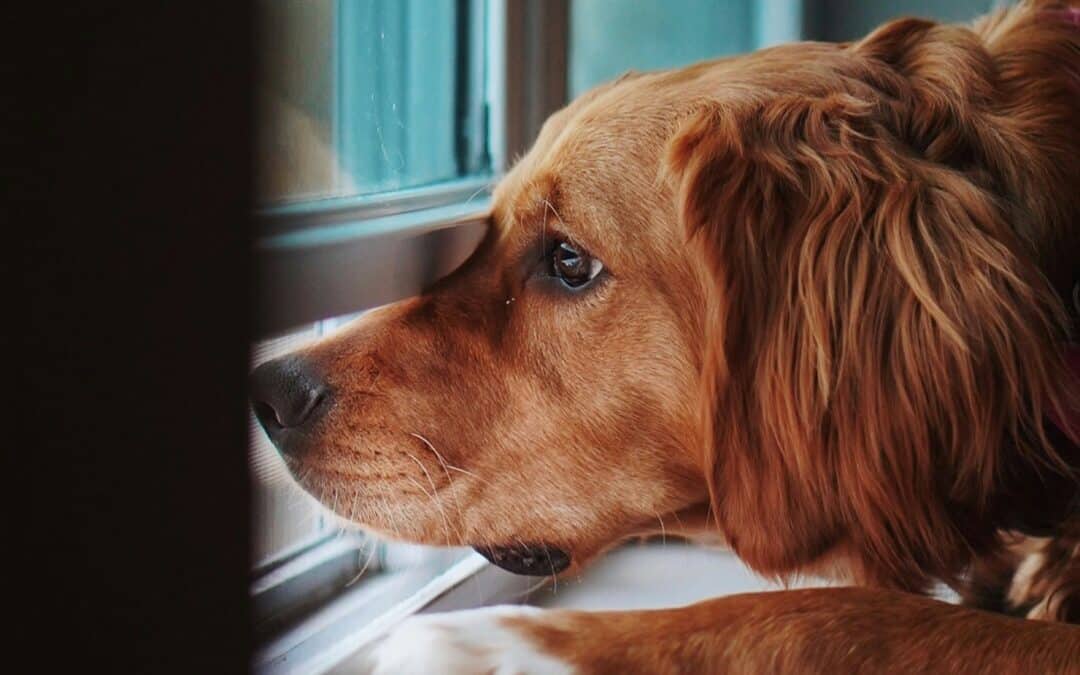
The first rumble of thunder, and your dog is already pacing, drooling, trying to squeeze under the bed. By the time fireworks start on the Fourth of July, some dogs are frantic enough to claw through drywall or bolt through a screen door. This is noise anxiety, a genuine panic response, and one of the most common, and most treatable, fears pet parents deal with.
What Is Noise Anxiety?
Noise anxiety is a fear response triggered by loud, sudden, or unpredictable sounds, most commonly thunderstorms, fireworks, and other loud environmental noises, that causes a dog or cat to experience genuine physiological panic, not simple annoyance or a preference to avoid noise.
During a noise-anxiety episode, a pet’s body is doing the same thing a person’s does during a panic attack: a real stress-hormone response, not a choice or an exaggeration. That distinction matters, because it’s easy to read a shaking, pacing dog as “being dramatic” rather than recognizing genuine fear.
One myth worth correcting directly: comforting a frightened dog during a storm does not reinforce the fear. Fear is an emotional state, not a learned behavior shaped by reward, so petting or soothing a scared dog can’t “teach” them to be more afraid the way praising a trained behavior teaches a dog to repeat it. Withholding comfort out of concern for “rewarding” the fear response is one of the most common, and most unnecessary, things pet parents do to themselves during a stressful moment.
Common Signs of Noise Anxiety
Signs of noise anxiety can appear during the noise itself, but many pets also react to cues that predict it, which is worth watching for separately from the noise event.
- Panting, drooling, or pacing during storms or fireworks
- Trying to hide, under furniture, in a closet, or in a bathroom
- Destructive behavior directed at doors or windows, concentrated around the noise event specifically
- Trembling, whining, or unusual clinginess
- Attempts to escape the yard or the house, a common cause of lost pets around fireworks holidays
- In cats: extended hiding, over-grooming, or hypervigilance that continues after the noise has stopped
- Anticipatory anxiety before a storm even arrives, some dogs react to dropping barometric pressure before humans can hear or see any sign of the storm
Get personalized advice and a treatment plan from a Pet Allies Behavior Expert:
The Pet Allies Approach to Noise Anxiety
Observe. Identify the specific trigger, thunder specifically, any loud bang, fireworks specifically, or a broader pattern, and note any anticipatory signs that show up before the noise itself starts.
Understand. Distinguish general noise sensitivity from a focused phobia, or from a broader anxiety condition where noise is just one of several triggers. Each of these calls for a different emphasis in the plan.
Support. The core tool here is desensitization and counterconditioning: playing recordings of the trigger sound at a very low volume, paired with something the pet enjoys, then gradually increasing volume over many sessions as tolerance builds. A designated safe space, a covered crate, an interior room, whatever the individual pet gravitates toward, supports this work.
Practice. This work needs to happen well before storm or fireworks season, not scrambled together the day of an event. Short, low-stakes sessions done consistently in the weeks beforehand build far more tolerance than any amount of comforting during an actual storm.
What Doesn’t Work (and Why)
Flooding, exposing a pet to the full-intensity trigger all at once. Forcing a dog to “just get used to it” by sitting through a full storm or a fireworks show without any gradual buildup tends to deepen the fear rather than resolve it, and can create new negative associations with anything nearby at the time.
Punishing anxious behavior during an episode. Barking, pacing, or destruction during a storm is a panic response, not defiance. Punishing it adds fear of the owner on top of an already frightened animal, without addressing the actual trigger.
Avoiding all exposure to the trigger sound, even in a controlled way. Some pet parents avoid anything related to the fear entirely, which feels protective but removes the only path to actually building tolerance through gradual, controlled exposure.
Have you met Allie, the Pet Allies Virtual Behavior Expert? She’ll help you get started on your journey to supporting your pet:
When Noise Anxiety Puts Your Pet at Risk
Noise anxiety isn’t only a comfort issue, it carries real physical risk that’s worth naming directly.
Fireworks-related escapes are a common cause of lost pets in the U.S. each year, as panicked dogs bolt through fences, doors, or even windows trying to get away from the sound. Panic during a storm or fireworks event can also lead to self-injury, broken nails or teeth from clawing at doors and crates, cuts from breaking through screens or glass, or exhaustion from sustained panic over a period of hours.
Left untreated, noise anxiety also tends to generalize over time, a dog who was once afraid only of fireworks may start reacting to thunder, then to other loud or sudden sounds entirely, as the fear response spreads to a wider range of triggers. This pattern is part of why earlier intervention tends to be more effective than waiting to see if it resolves on its own.
How Pet Allies Can Help With Noise Anxiety
Expert Chat, anytime. A family noticing any of the warning signs above can reach a Pet Allies expert directly through Expert Chat to talk through what they’re seeing and get guidance on next steps, without waiting for a scheduled appointment.
A certified veterinary behaviorist affiliated with Pet Allies. For cases where medication may support a treatment plan, a certified veterinary behaviorist can provide recommendations, which are then discussed with and prescribed by the family’s own veterinarian.
A direct path back to your veterinarian. Behavior changes can sometimes be worsened by pain or an underlying medical issue, especially if the change is new or has shifted in intensity recently, so a veterinary visit to rule out a medical cause is an important part of any full plan.
Honest guidance on scope. Severe bite-risk cases, active emergencies, and situations requiring immediate in-person intervention fall outside what a remote behavioral program like Pet Allies is designed to safely handle. In these cases, a Pet Allies expert will say so directly and help point a family toward the appropriate in-person specialist or emergency resource.
Common Questions About Noise Anxiety
No. Noise anxiety is a genuine physiological panic response, not exaggeration or attention-seeking. The shaking, drooling, and pacing reflect real stress hormones at work, the same as a panic response in a person.
No. Fear is an emotional state, not a behavior shaped by reward, so comforting a frightened dog can’t reinforce the fear the way praise reinforces a trained command. Withholding comfort doesn’t help, and isn’t necessary.
Rarely. Left unaddressed, noise anxiety typically stays the same or worsens over time, and can generalize to a wider range of triggers without a structured plan to build tolerance.
Often, yes. Many mild to moderate cases improve significantly through desensitization and counterconditioning alone. Medication is sometimes recommended for more severe cases, in coordination with a veterinarian.
Brief hiding during a specific loud event is a normal cat response. It’s worth a closer look if the hiding is extreme, lasts long after the noise has stopped, or is paired with other signs like over-grooming or appetite changes.
Where to Go Next
The Pet Allies Approach, observing, understanding, supporting, and practicing, applies the same way to noise anxiety as it does to every other challenge in the library. Whatever your pet’s specific trigger, the path forward starts with understanding what’s actually driving the fear.
Pet Allies will support you and your pet. Sign up, talk to Allie, our Virtual Behavior Expert, get connected to a live Behavior Expert and receive an easy-to-follow treatment plan. See pet behaviors improve and pet happiness increase in just weeks: