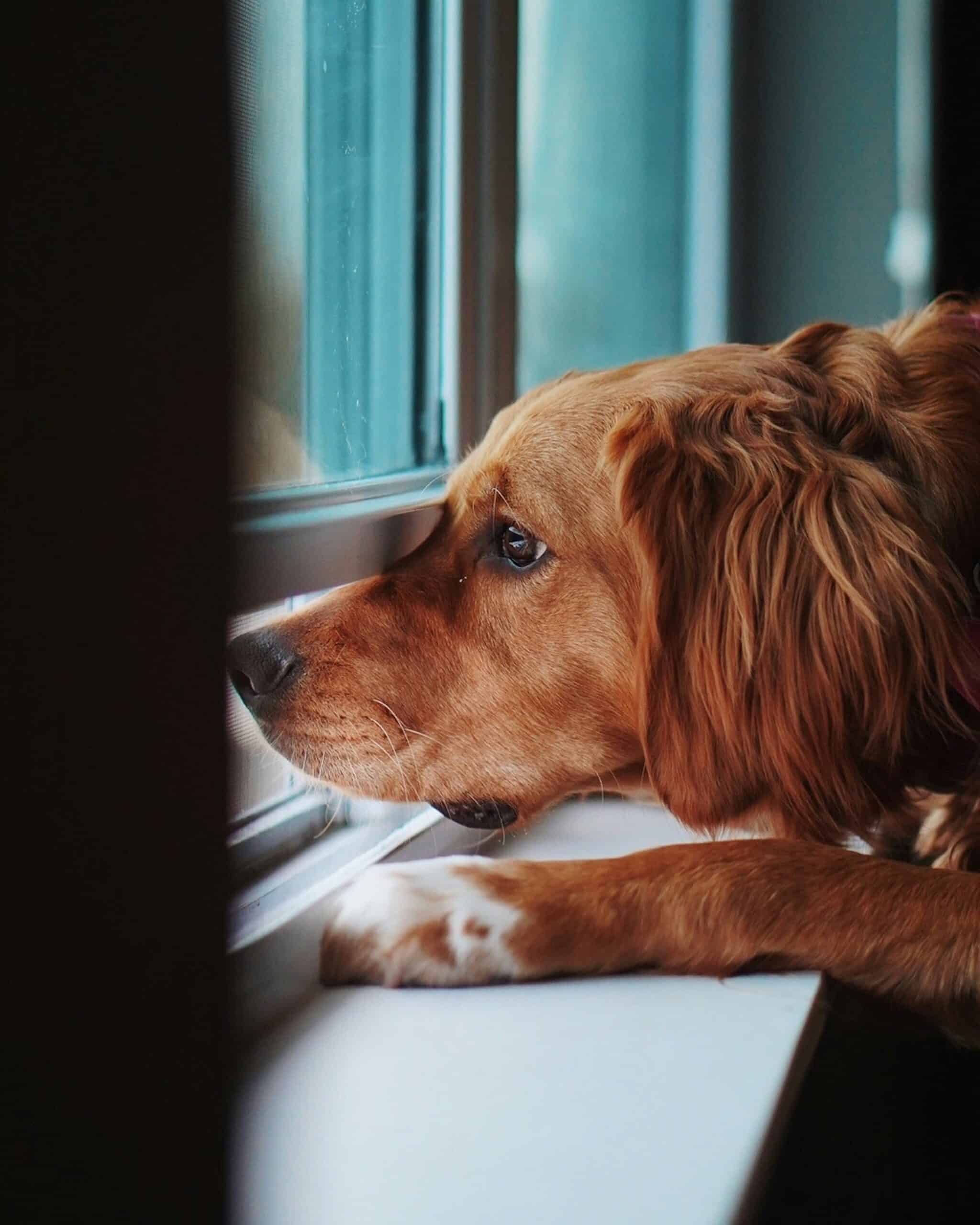
A dog that shreds a doormat, howls for hours, or has an accident the moment you leave, isn’t simply being “naughty.” In many cases, the underlying emotion is panic. Separation anxiety is one of the most common and most misunderstood behavior challenges pet parents face, and it’s a textbook example of behavior as communication: distress a dog can’t express any other way.
What Is Separation Anxiety in Dogs?
Separation anxiety is a panic response some dogs experience when they’re left alone or separated from a specific person, driven by genuine fear and distress rather than disobedience, spite, or a lack of training.
It’s easy to misread. A chewed-up doorframe or a puddle by the door can look like defiance or poor house training, but for a dog with separation anxiety, it’s a symptom of real panic, not a choice. Understanding that distinction changes how a family responds to it, and it’s the first step toward actually resolving it rather than just managing the mess.
One of the most persistent myths worth addressing directly: the “guilty look” a dog gives when a family comes home to a chewed shoe isn’t guilt. Dogs don’t reason about past misdeeds the way people do. That posture (lowered head, tucked tail, avoiding eye contact) is a stress/fear response to a person’s tone or body language in the moment, not an admission of wrongdoing. Reading it as guilt is one of the most common ways this condition gets misunderstood from the start.
What Are the Signs of Separation Anxiety in Dogs?
Signs of separation anxiety typically appear only when a dog is left alone or anticipates being left alone, which is a key detail that distinguishes it from other causes of similar behavior.
- Destructive chewing or scratching concentrated at doors, windows, or exit points
- Excessive barking, whining, or howling that begins shortly after a person leaves
- Pacing, drooling, or panting unrelated to heat or exercise
- House-soiling that only happens when the dog is alone, in a dog who is otherwise reliably house-trained
- Attempts to escape a crate, room, or the house itself
- Following a specific person from room to room and showing distress at the earliest signs of departure (picking up keys, putting on shoes)
If these behaviors also show up when the dog is not alone, or the destruction isn’t concentrated near exits, boredom or excess energy is a more likely explanation than separation anxiety, and it calls for a different kind of plan entirely.
Get personalized advice and a treatment plan from a Pet Allies Behavior Expert:
What Causes Separation Anxiety in Dogs?
There’s rarely a single cause. Separation anxiety usually develops from a mix of genetics, early life experience, and individual temperament, and it’s often set off by a change in a dog’s routine or household. Common triggers include:
- A change in schedule, such as a family member returning to the office after working from home
- A move to a new home
- Rehoming, a shelter stay, or a change in guardians
- The loss of a family member or another pet in the household
- Someone moving out, such as a child leaving for school
None of these guarantee a dog will develop separation anxiety, and some dogs develop it with no obvious trigger at all. That’s part of why understanding the individual dog matters more than any checklist.
How Is Separation Anxiety in Dogs Treated?
At Pet Allies, treatment follows four steps: Observe, Understand, Support, and Practice. The goal is to address the panic behind the behavior, not just the behavior itself.
Step 1: Observe the Triggers
Before building a plan, look at when the anxiety actually starts. For most dogs, distress builds well before a person is out the door, triggered by specific departure cues like grabbing keys, putting on shoes, or picking up a bag. Identifying which specific cues set off the response, and how a dog’s body language shifts as those cues happen, is where an effective plan starts.
Step 2: Understand the Cause
Not every dog that struggles when left alone has true separation anxiety. Some dogs experience isolation distress (discomfort being alone at all) rather than separation distress (distress tied to a specific person leaving). Others are dealing with under-exercise, incomplete house training, or a medical issue that happens to overlap with alone time. Getting this distinction right matters because the right plan for one can do nothing for another.
Step 3: Support With Gradual Desensitization
Once the trigger and the underlying cause are clear, the plan centers on gradual desensitization: helping a dog build tolerance to departure cues and short absences in small, manageable steps, rather than expecting them to tolerate a full workday alone right away. This is where generic advice tends to fall short, because it treats all alone-time struggles as the same problem with the same fix.
Step 4: Practice Consistently
We start with independence building in the house when not alone. Then, short, consistent daily repetitions of departure cues and brief absences, done at a pace the dog can actually handle, build tolerance far more effectively than occasional long, high-stress sessions. Consistency, not intensity, is what moves a dog through this kind of plan.
What Doesn’t Work for Separation Anxiety in Dogs?
Several commonly recommended fixes for separation anxiety don’t address the underlying panic, and some can make it worse.
Crating without desensitization. Confining a dog to a crate doesn’t resolve separation anxiety. It removes the dog’s ability to act on the panic, but the underlying distress is often still there.
“Crating a dog with separation anxiety without addressing the underlying panic response not only doesn’t resolve the anxiety, it just removes the dog’s ability to express it and creates the additional stress of being trapped in his crate. The dog is often just as distressed, with fewer outlets to show you.”
Dr. Liz Stelow, DVM, DACVB, Chief Veterinary Behaviorist, UC Davis
Punishing the destruction or vocalizing. Because the behavior is driven by panic rather than defiance, punishment doesn’t teach a dog to feel safer when left alone. It can add a fear of the owner’s return on top of the existing anxiety, compounding the problem rather than resolving it.
Getting a second dog to solve it. This works for dogs whose distress is genuinely about being alone in general (isolation distress) but does little for dogs whose anxiety is tied specifically to one person leaving (separation distress), which is a more common pattern. Without knowing which type of distress is driving the behavior, this is an expensive, permanent fix for a problem it may not actually solve.
Have you met Allie, the Pet Allies Virtual Behavior Expert? She’ll help you get started on your journey to supporting your pet:
How Pet Allies Can Help With Separation Anxiety
Expert Chat, anytime. A family noticing any of the warning signs above can reach a Pet Allies expert directly through Expert Chat to talk through what they’re seeing and get guidance on next steps, without waiting for a scheduled appointment.
A certified veterinary behaviorist affiliated with Pet Allies. For cases where medication may support a treatment plan, a certified veterinary behaviorist can provide recommendations, which are then discussed with and prescribed by the family’s own veterinarian.
A direct path back to your veterinarian. Because behavioral changes can sometimes be worsened by pain or an underlying medical issue, especially if the behavior is new or has changed suddenly, a veterinary visit to rule out a medical cause is an important part of a full plan.
Honest guidance on scope. Severe bite-risk cases, active emergencies, and situations requiring immediate in-person intervention fall outside what a remote behavioral program like Pet Allies is designed to safely handle. In these cases, a Pet Allies expert will say so directly and help point a family toward the appropriate in-person specialist or emergency resource, rather than attempting to manage something remotely that needs hands-on support.
When Should You See a Vet About Separation Anxiety?
A veterinarian should be part of a separation anxiety plan in two situations: to rule out medical causes that can look like separation anxiety (certain medical conditions can cause house-soiling or restlessness that mimics it), and to discuss whether medication could support a behavioral plan for moderate to more severe cases.
Medication, when appropriate, is a support tool that can make a dog more receptive to behavioral work, not a replacement for it. A veterinarian or veterinary behaviorist remains responsible for any diagnosis or prescription, working alongside the behavioral plan rather than in place of it.
Common Questions About Separation Anxiety in Dogs
No. Separation anxiety isn’t caused by spoiling a dog, and it isn’t a training failure. It stems from a combination of genetics, early life experience, and individual temperament, and can develop in dogs with any kind of upbringing.
Rarely, without intervention. Left unaddressed, separation anxiety typically stays the same or worsens over time, since the dog has no way to learn that being alone is safe without a structured plan to build that tolerance.
Many dogs see substantial, lasting improvement with a consistent, root-cause-focused plan. The timeline and degree of improvement vary by dog, which is why an individualized plan matters more than a one-size-fits-all protocol.
It depends on the dog and how severe the anxiety is. Many families see meaningful progress within a few weeks of consistent practice, while more severe cases can take several months. Short, steady daily sessions tend to move things along faster than occasional long ones.
No. A dog that enjoys close contact with its owner isn’t necessarily anxious. Separation anxiety specifically involves a panic response, not just a preference for company.
Not always. Many cases improve with a structured behavioral plan alone. Medication is sometimes recommended for more severe cases to help a dog become more receptive to that behavioral work, and that decision is made together with a veterinarian.
Try not to leave your dog alone for longer than they can currently handle, since each panic episode can reinforce the fear. A pet sitter, doggy daycare, a trusted neighbor, or bringing your dog along can help bridge the gap. Keeping departures and returns calm and low-key helps too. A Pet Allies expert can help you set up a short-term management plan while the longer-term work gets underway.
Where to Go Next
The Pet Allies Approach (observing, understanding, supporting, and practicing) applies the same way to separation anxiety as it does to every other behavior challenge. As we publish in-depth looks at resource guarding, veterinary anxiety, and other common concerns, each one will build on this same approach, so the path forward stays consistent no matter what your pet is going through.
If this sounds like what your dog is going through, you don’t have to piece together a plan on your own.
Pet Allies will support you and your pet. Sign up, talk to Allie, our Virtual Behavior Expert, get connected to a live Behavior Expert and receive an easy-to-follow treatment plan. See pet behaviors improve and pet happiness increase in just weeks: